
Frontier AI lab | 5,000 employees
Frontier AI lab | 5,000 employees
Frontier AI lab | 5,000 employees
summary
How should design operate when code isn’t the bottleneck anymore?
Claude now writes most of Anthropic’s code. As engineering accelerates, design is evolving alongside it.
Features that once took weeks to build can now ship in days, creating what Head of Product Design Joel Lewenstein calls a "timescale compression" of software development. But design hasn't accelerated at the same pace. As implementation becomes cheaper and faster, exploration, decision-making, and refinement increasingly determine how quickly products move forward.
At Anthropic, the response has been to make designers builders. Every designer ships code in their first week, and they're some of the heaviest users of Claude, often building internal tools to solve their own problems. Because teams own and evolve their tooling, workflows stay flexible and can adapt as needs change, surfacing directions that may not have otherwise emerged from fixed processes.
As implementation gets easier, more of a designer’s time can go toward choosing directions, exercising judgment, and pushing the work through the final stretch of quality and polish. Getting something built takes less effort; deciding what’s worth building and making it genuinely good still takes work.
summary
How should design operate when code isn’t the bottleneck anymore?
Claude now writes most of Anthropic’s code. As engineering accelerates, design is evolving alongside it.
Features that once took weeks to build can now ship in days, creating what Head of Product Design Joel Lewenstein calls a "timescale compression" of software development. But design hasn't accelerated at the same pace. As implementation becomes cheaper and faster, exploration, decision-making, and refinement increasingly determine how quickly products move forward.
At Anthropic, the response has been to make designers builders. Every designer ships code in their first week, and they're some of the heaviest users of Claude, often building internal tools to solve their own problems. Because teams own and evolve their tooling, workflows stay flexible and can adapt as needs change, surfacing directions that may not have otherwise emerged from fixed processes.
As implementation gets easier, more of a designer’s time can go toward choosing directions, exercising judgment, and pushing the work through the final stretch of quality and polish. Getting something built takes less effort; deciding what’s worth building and making it genuinely good still takes work.
summary
How should design operate when code isn’t the bottleneck anymore?
Claude now writes most of Anthropic’s code. As engineering accelerates, design is evolving alongside it.
Features that once took weeks to build can now ship in days, creating what Head of Product Design Joel Lewenstein calls a "timescale compression" of software development. But design hasn't accelerated at the same pace. As implementation becomes cheaper and faster, exploration, decision-making, and refinement increasingly determine how quickly products move forward.
At Anthropic, the response has been to make designers builders. Every designer ships code in their first week, and they're some of the heaviest users of Claude, often building internal tools to solve their own problems. Because teams own and evolve their tooling, workflows stay flexible and can adapt as needs change, surfacing directions that may not have otherwise emerged from fixed processes.
As implementation gets easier, more of a designer’s time can go toward choosing directions, exercising judgment, and pushing the work through the final stretch of quality and polish. Getting something built takes less effort; deciding what’s worth building and making it genuinely good still takes work.
We can make all the software in the world, and yet my phone holds only 16 apps and my day only has 18 waking hours. That's what design has always done and always will: not just can we make it, but is this worth making at all?

Joel Lewenstein
HEAD OF PRODUCT DESIGN, ANTHROPIC
We can make all the software in the world, and yet my phone holds only 16 apps and my day only has 18 waking hours. That's what design has always done and always will: not just can we make it, but is this worth making at all?
Joel Lewenstein
HEAD OF PRODUCT DESIGN, ANTHROPIC
We can make all the software in the world, and yet my phone holds only 16 apps and my day only has 18 waking hours. That's what design has always done and always will: not just can we make it, but is this worth making at all?
Joel Lewenstein
HEAD OF PRODUCT DESIGN, ANTHROPIC
KEY INSIGHTS
What we learned
01
The velocity gap between engineering and design
AI has compressed the time required to build software. Features that once took weeks can now ship in days, but design hasn't accelerated at the same rate. The result is a reversal of a long-standing dynamic: implementation is often no longer the bottleneck. The challenge, increasingly, is: how can design keep pace with engineering's new speed?
Anthropic’s designers are taking a hard look at where their process can compress and where it shouldn't. Spitting out extra directions, digging up past research, or managing tedious dev chores can happen in seconds; figuring out which direction actually makes sense still takes time.
02
Designers as toolmakers
Now that building software is far less rigid, designers aren't stuck with off-the-shelf software. Across Anthropic, employees have built custom IDEs, internal mini-apps, and tailored Claude skills for their own workflows. Researchers can launch systems that used to require a dedicated engineering sprint; designers can automate repetitive technical steps and bake their own taste right into their tools. The strategy is clear: automate the mechanical friction so you can focus your time on the decisions that require human judgment.
03
Treating code as the clay
Every designer ships code in their first week, and designers are among the company's heaviest users of Claude. Working directly in code shortens feedback loops, reduces handoffs, and makes it easier to explore ideas at the pace modern product teams increasingly expect. As Joel notes, “code has always been the clay for software.”
04
A new rhythm of working together
Moving faster makes it easy to retreat into a solo bubble, while projects evolve so quickly that a weekly design crit might review work that’s already obsolete. Anthropic adjusted by moving to smaller, far more frequent crits, reviewing live demos instead of long specs, and talking through problems together before touching code. The team is also looking for ways to track context as more work shifts directly into code, where past decisions can easily disappear.
KEY INSIGHTS
What we learned
01
The velocity gap between engineering and design
AI has compressed the time required to build software. Features that once took weeks can now ship in days, but design hasn't accelerated at the same rate. The result is a reversal of a long-standing dynamic: implementation is often no longer the bottleneck. The challenge, increasingly, is: how can design keep pace with engineering's new speed?
Anthropic’s designers are taking a hard look at where their process can compress and where it shouldn't. Spitting out extra directions, digging up past research, or managing tedious dev chores can happen in seconds; figuring out which direction actually makes sense still takes time.
02
Designers as toolmakers
Now that building software is far less rigid, designers aren't stuck with off-the-shelf software. Across Anthropic, employees have built custom IDEs, internal mini-apps, and tailored Claude skills for their own workflows. Researchers can launch systems that used to require a dedicated engineering sprint; designers can automate repetitive technical steps and bake their own taste right into their tools. The strategy is clear: automate the mechanical friction so you can focus your time on the decisions that require human judgment.
03
Treating code as the clay
Every designer ships code in their first week, and designers are among the company's heaviest users of Claude. Working directly in code shortens feedback loops, reduces handoffs, and makes it easier to explore ideas at the pace modern product teams increasingly expect. As Joel notes, “code has always been the clay for software.”
04
A new rhythm of working together
Moving faster makes it easy to retreat into a solo bubble, while projects evolve so quickly that a weekly design crit might review work that’s already obsolete. Anthropic adjusted by moving to smaller, far more frequent crits, reviewing live demos instead of long specs, and talking through problems together before touching code. The team is also looking for ways to track context as more work shifts directly into code, where past decisions can easily disappear.
KEY INSIGHTS
What we learned
01
The velocity gap between engineering and design
AI has compressed the time required to build software. Features that once took weeks can now ship in days, but design hasn't accelerated at the same rate. The result is a reversal of a long-standing dynamic: implementation is often no longer the bottleneck. The challenge, increasingly, is: how can design keep pace with engineering's new speed?
Anthropic’s designers are taking a hard look at where their process can compress and where it shouldn't. Spitting out extra directions, digging up past research, or managing tedious dev chores can happen in seconds; figuring out which direction actually makes sense still takes time.
02
Designers as toolmakers
Now that building software is far less rigid, designers aren't stuck with off-the-shelf software. Across Anthropic, employees have built custom IDEs, internal mini-apps, and tailored Claude skills for their own workflows. Researchers can launch systems that used to require a dedicated engineering sprint; designers can automate repetitive technical steps and bake their own taste right into their tools. The strategy is clear: automate the mechanical friction so you can focus your time on the decisions that require human judgment.
03
Treating code as the clay
Every designer ships code in their first week, and designers are among the company's heaviest users of Claude. Working directly in code shortens feedback loops, reduces handoffs, and makes it easier to explore ideas at the pace modern product teams increasingly expect. As Joel notes, “code has always been the clay for software.”
04
A new rhythm of working together
Moving faster makes it easy to retreat into a solo bubble, while projects evolve so quickly that a weekly design crit might review work that’s already obsolete. Anthropic adjusted by moving to smaller, far more frequent crits, reviewing live demos instead of long specs, and talking through problems together before touching code. The team is also looking for ways to track context as more work shifts directly into code, where past decisions can easily disappear.
Designing closer to production
Meaghan Choi, Product Designer
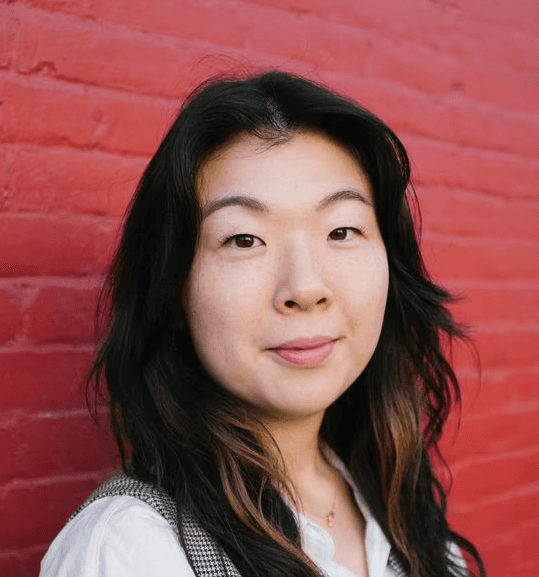
Meaghan Choi, who leads design for Claude Code and Cowork, uses Claude to strip out the technical friction between an initial idea and a finished product. She’s built reusable workflows for her most common tasks, whether that's spinning up a local environment or navigating tricky Git and deployment steps. Whenever a fix works, she bakes it into a shortcut she can pull up the next time around.
She’s also using Claude to explore more directions before committing to one. A prototyping workflow she built can take a feature idea and generate several interactive HTML options, giving her more room to compare, iterate, and make a call before carrying that work into production.
The real superpower of coding comes when you're not just prototyping in a playground, but when you're actually pushing to production, because that's the end product your audience is going to see.
Meaghan Choi
Product designer, Anthropic
Designing closer to production
Meaghan Choi, Product Designer
Meaghan Choi, who leads design for Claude Code and Cowork, uses Claude to strip out the technical friction between an initial idea and a finished product. She’s built reusable workflows for her most common tasks, whether that's spinning up a local environment or navigating tricky Git and deployment steps. Whenever a fix works, she bakes it into a shortcut she can pull up the next time around.
She’s also using Claude to explore more directions before committing to one. A prototyping workflow she built can take a feature idea and generate several interactive HTML options, giving her more room to compare, iterate, and make a call before carrying that work into production.
The real superpower of coding comes when you're not just prototyping in a playground, but when you're actually pushing to production, because that's the end product your audience is going to see.
Meaghan Choi
Product designer, Anthropic
Designing closer to production
Meaghan Choi, Product Designer
Meaghan Choi, who leads design for Claude Code and Cowork, uses Claude to strip out the technical friction between an initial idea and a finished product. She’s built reusable workflows for her most common tasks, whether that's spinning up a local environment or navigating tricky Git and deployment steps. Whenever a fix works, she bakes it into a shortcut she can pull up the next time around.
She’s also using Claude to explore more directions before committing to one. A prototyping workflow she built can take a feature idea and generate several interactive HTML options, giving her more room to compare, iterate, and make a call before carrying that work into production.
The real superpower of coding comes when you're not just prototyping in a playground, but when you're actually pushing to production, because that's the end product your audience is going to see.
Meaghan Choi
Product designer, Anthropic
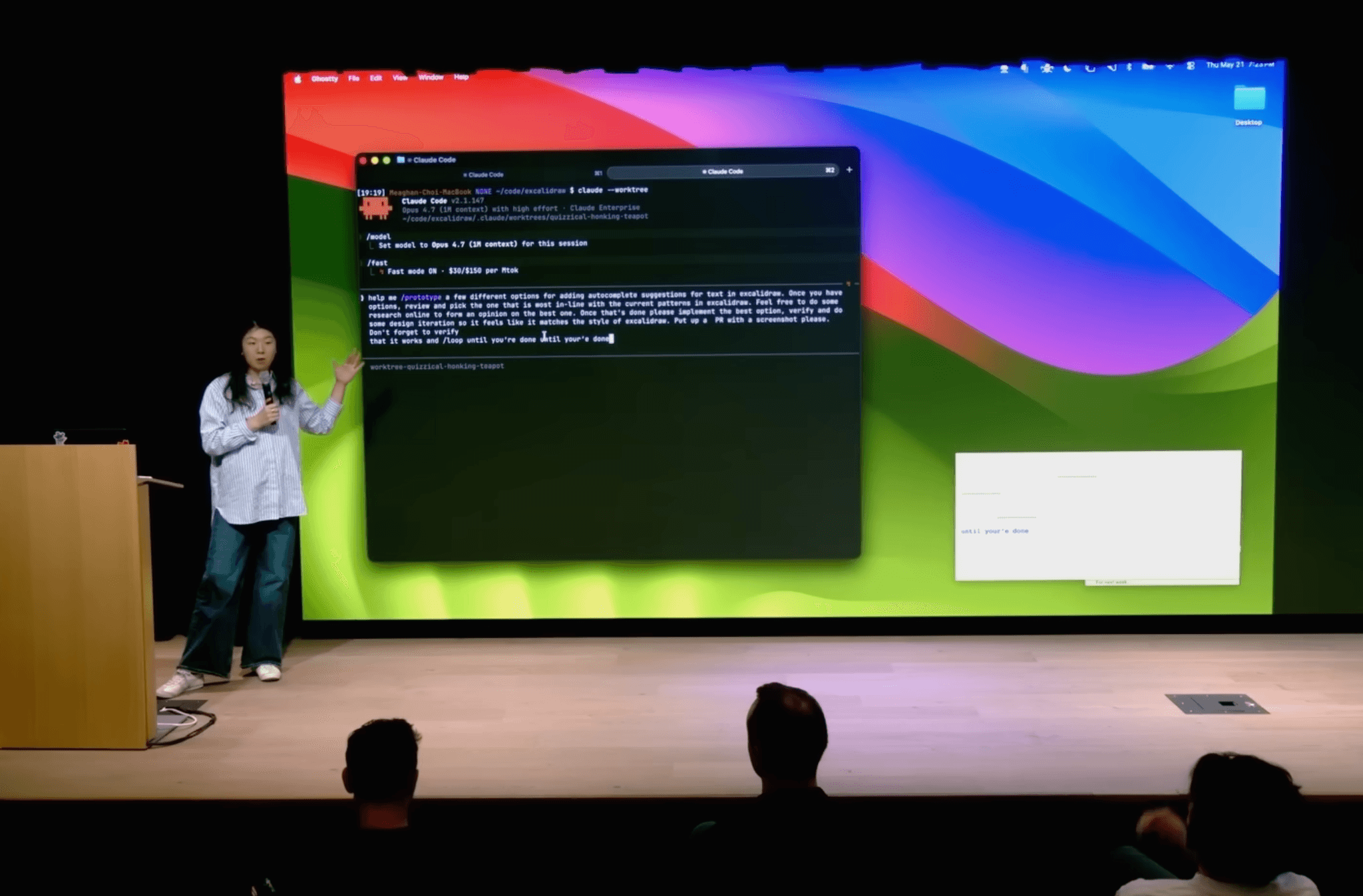
Earlier this summer, Meaghan demoed some of her Claude Code workflows live at Dive Club’s NYC event.
Earlier this summer, Meaghan demoed some of her Claude Code workflows live at Dive Club’s NYC event.
Earlier this summer, Meaghan demoed some of her Claude Code workflows live at Dive Club’s NYC event.
in action
From side project to Claude Design
NATE PARROTT, PRODUCT DESIGNER
In late 2025, product designer Nate Parrott was designing the VS Code experience for Claude Code alongside two engineers. As new models made the engineers dramatically faster, Nate started experimenting with whether Claude could speed up early design exploration too. He built a tool that used Claude to generate interactive prototypes grounded in Anthropic’s design system.
Designers began using it to explore features and interactions, while educators, salespeople, and other non-designers used it to create visual artifacts they couldn’t have made before. Prototypes could be shared with a link, with feedback flowing directly back into Claude for another round of iteration. The project eventually became the precursor to Claude Design.
People who weren't traditionally designers are putting on their designer hats. They were already doing high-level design thinking but didn't have the skills to make something that looks like a design artifact. Now, it's almost as if they were a designer all along.

Nate Parrott
Product designer, Anthropic
in action
From side project to Claude Design
NATE PARROTT, PRODUCT DESIGNER
In late 2025, product designer Nate Parrott was designing the VS Code experience for Claude Code alongside two engineers. As new models made the engineers dramatically faster, Nate started experimenting with whether Claude could speed up early design exploration too. He built a tool that used Claude to generate interactive prototypes grounded in Anthropic’s design system.
Designers began using it to explore features and interactions, while educators, salespeople, and other non-designers used it to create visual artifacts they couldn’t have made before. Prototypes could be shared with a link, with feedback flowing directly back into Claude for another round of iteration. The project eventually became the precursor to Claude Design.
People who weren't traditionally designers are putting on their designer hats. They were already doing high-level design thinking but didn't have the skills to make something that looks like a design artifact. Now, it's almost as if they were a designer all along.
Nate Parrott
Product designer, Anthropic
in action
From side project to Claude Design
NATE PARROTT, PRODUCT DESIGNER
In late 2025, product designer Nate Parrott was designing the VS Code experience for Claude Code alongside two engineers. As new models made the engineers dramatically faster, Nate started experimenting with whether Claude could speed up early design exploration too. He built a tool that used Claude to generate interactive prototypes grounded in Anthropic’s design system.
Designers began using it to explore features and interactions, while educators, salespeople, and other non-designers used it to create visual artifacts they couldn’t have made before. Prototypes could be shared with a link, with feedback flowing directly back into Claude for another round of iteration. The project eventually became the precursor to Claude Design.
People who weren't traditionally designers are putting on their designer hats. They were already doing high-level design thinking but didn't have the skills to make something that looks like a design artifact. Now, it's almost as if they were a designer all along.
Nate Parrott
Product designer, Anthropic
in action
User researcher turned builder
Matt Gallivan, User Researcher
When Joel wanted a more consistent way to understand how users felt across Anthropic’s products, UX researcher Matt Gallivan used Claude to build a weekly survey system and product quality dashboard himself. It took about a week; Matt estimates a similar project once might have taken two or three researchers a couple of months.
It’s one example of how AI is stretching the boundaries of roles across Anthropic. Matt describes his work now as part researcher, part product designer, part PM, and part engineer, with the ability to build more of the infrastructure around his own work instead of waiting for someone else to do it.
Ever since the beginning of 2026, I’ve been part user researcher, part product designer, part PM, part engineer. I’m doing things as a non-technical person that I have absolutely no business doing, but doing stuff that is adding real value. It’s making my work more effective. It’s helping move the team forward.

Matt Gallivan
User Researcher
in action
User researcher turned builder
Matt Gallivan, User Researcher
When Joel wanted a more consistent way to understand how users felt across Anthropic’s products, UX researcher Matt Gallivan used Claude to build a weekly survey system and product quality dashboard himself. It took about a week; Matt estimates a similar project once might have taken two or three researchers a couple of months.
It’s one example of how AI is stretching the boundaries of roles across Anthropic. Matt describes his work now as part researcher, part product designer, part PM, and part engineer, with the ability to build more of the infrastructure around his own work instead of waiting for someone else to do it.
Ever since the beginning of 2026, I’ve been part user researcher, part product designer, part PM, part engineer. I’m doing things as a non-technical person that I have absolutely no business doing, but doing stuff that is adding real value. It’s making my work more effective. It’s helping move the team forward.
Matt Gallivan
User Researcher
in action
User researcher turned builder
Matt Gallivan, User Researcher
When Joel wanted a more consistent way to understand how users felt across Anthropic’s products, UX researcher Matt Gallivan used Claude to build a weekly survey system and product quality dashboard himself. It took about a week; Matt estimates a similar project once might have taken two or three researchers a couple of months.
It’s one example of how AI is stretching the boundaries of roles across Anthropic. Matt describes his work now as part researcher, part product designer, part PM, and part engineer, with the ability to build more of the infrastructure around his own work instead of waiting for someone else to do it.
Ever since the beginning of 2026, I’ve been part user researcher, part product designer, part PM, part engineer. I’m doing things as a non-technical person that I have absolutely no business doing, but doing stuff that is adding real value. It’s making my work more effective. It’s helping move the team forward.
Matt Gallivan
User Researcher
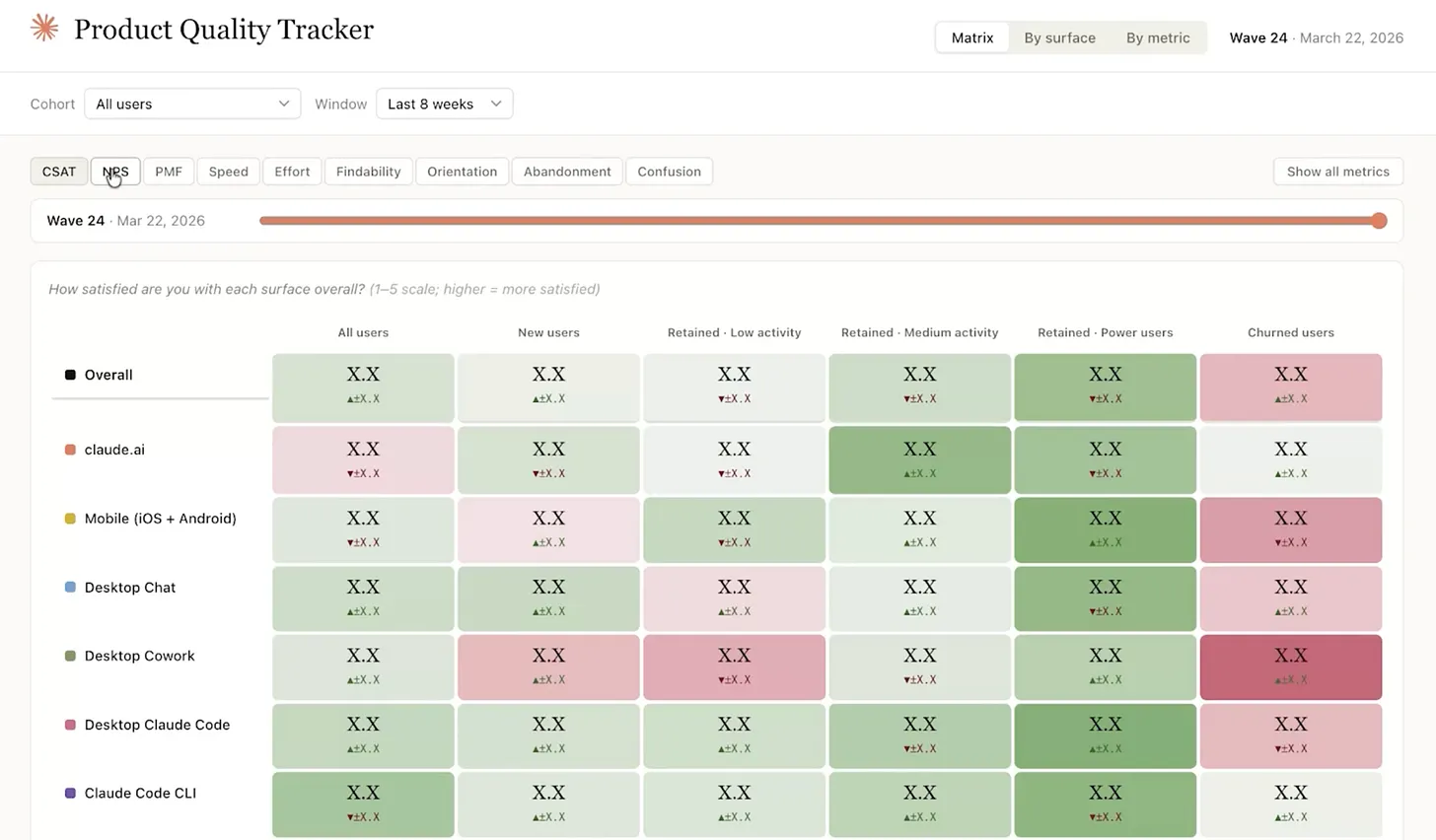
The weekly product quality dashboard Matt built with Claude in a week’s span
The weekly product quality dashboard Matt built with Claude in a week’s span
The weekly product quality dashboard Matt built with Claude in a week’s span
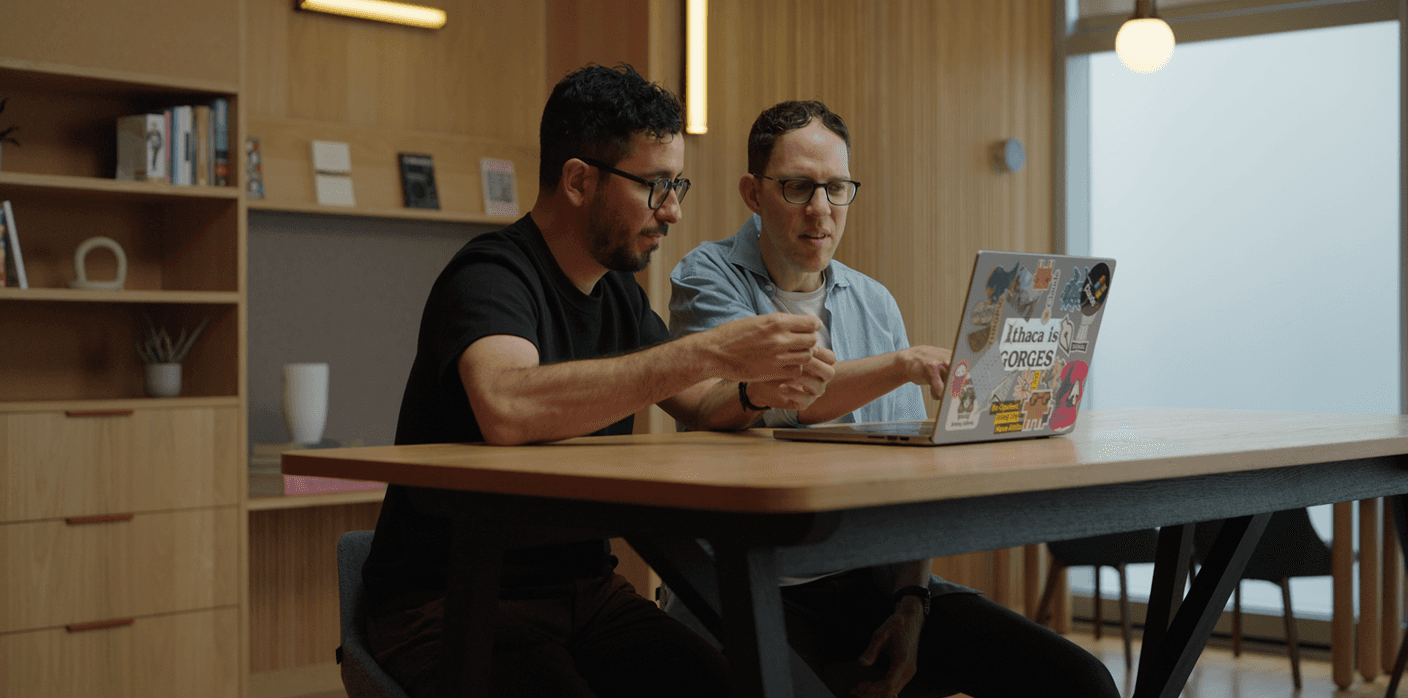
FEATURED ANTHROPIC TEAM MEMBERS
NAME
POSITION
Joel Lewenstein
Head of Product Design
Nate Parrott
Product Designer
Meaghan Choi
Product Designer
Matt Gallivan
User Researcher
Kyle Turman
Product Designer
FEATURED ANTHROPIC TEAM MEMBERS
NAME
POSITION
Joel Lewenstein
Head of Product Design
Nate Parrott
Product Designer
Meaghan Choi
Product Designer
Matt Gallivan
User Researcher
Kyle Turman
Product Designer
FEATURED ANTHROPIC TEAM MEMBERS
NAME
POSITION
Joel Lewenstein
Head of Product Design
Nate Parrott
Product Designer
Meaghan Choi
Product Designer
Matt Gallivan
User Researcher
Kyle Turman
Product Designer
Join the team
Anthropic Design
Anthropic is hiring designers and researchers to help shape Claude and how people interact with increasingly capable AI. The team looks for people with a strong point of view on where software is going, a maker mentality, and a willingness to keep rethinking how they work as the tools change. Bonus: a comfort level with developer workflows, being capable of building your own tools, and staying close to production.
Join the team
Anthropic Design
Anthropic is hiring designers and researchers to help shape Claude and how people interact with increasingly capable AI. The team looks for people with a strong point of view on where software is going, a maker mentality, and a willingness to keep rethinking how they work as the tools change. Bonus: a comfort level with developer workflows, being capable of building your own tools, and staying close to production.
Join the team
Anthropic Design
Anthropic is hiring designers and researchers to help shape Claude and how people interact with increasingly capable AI. The team looks for people with a strong point of view on where software is going, a maker mentality, and a willingness to keep rethinking how they work as the tools change. Bonus: a comfort level with developer workflows, being capable of building your own tools, and staying close to production.
" height="84.64907000000001px" id="LbxKM8inW" transform="translate(0 2.663)" width="84.1602px"/><path d="M 10.28 20.56 C 4.474 20.56 0 15.723 0 10.28 C 0 4.837 4.474 0 10.28 0 C 16.086 0 20.56 4.837 20.56 10.28 C 20.56 15.723 16.086 20.56 10.28 20.56 Z M 1.454 87.307 L 1.454 27.57 L 19.111 27.57 L 19.111 87.307 Z" fill="rgb(247, 246, 244)" height="87.30739914855957px" id="YCbiaWN1B" transform="translate(84.16 0)" width="20.559799999999996px"/><path d="M 10.28 20.56 C 4.474 20.56 0 15.723 0 10.28 C 0 4.837 4.474 0 10.28 0 C 16.085 0 20.559 4.837 20.559 10.28 C 20.559 15.723 16.085 20.56 10.28 20.56 Z M 1.449 87.307 L 1.449 27.57 L 19.106 27.57 L 19.106 87.307 Z" fill="rgb(247, 246, 244)" height="87.30739914855957px" id="zH_XrDBAM" transform="translate(130.715 0)" width="20.558999999999997px"/><path d="M 17.657 61.309 L 0 61.309 L 0 1.571 L 17.657 1.571 L 17.657 9.189 C 21.406 3.383 27.208 0 35.314 0 C 48.977 0 57.323 9.311 57.323 24.427 L 57.323 61.309 L 39.666 61.309 L 39.666 28.539 C 39.666 20.678 35.794 16.203 28.901 16.203 C 22.009 16.203 17.657 21.28 17.657 29.626 Z" fill="rgb(247, 246, 244)" height="61.3085px" id="eiMuoNzTE" transform="translate(158.281 25.999)" width="57.32300000000001px"/><path d="M 28.661 84.649 L 0 84.649 L 0 0 L 28.661 0 C 52.364 0 71.71 18.5 71.71 42.325 C 71.71 66.15 52.364 84.649 28.661 84.649 Z M 28.177 17.055 L 18.141 17.055 L 18.141 67.603 L 28.177 67.603 C 42.202 67.603 53.089 56.359 53.089 42.329 C 53.089 28.299 42.206 17.055 28.177 17.055 Z" fill="rgb(247, 246, 244)" height="84.64903px" id="J8cX6jaQ7" transform="translate(244.497 2.658)" width="71.70999999999998px"/><path d="M 59.374 47.043 C 54.416 56.839 44.742 62.884 31.682 62.884 C 13.06 62.884 0 49.946 0 31.442 C 0 12.938 13.3 0 30.957 0 C 48.614 0 61.43 13.183 61.43 31.922 C 61.43 33.978 61.308 35.428 61.19 36.274 L 17.294 36.274 C 17.901 43.289 24.309 48.366 31.686 48.366 C 38.339 48.366 41.722 45.585 44.507 41.111 L 59.379 47.035 Z M 44.14 24.79 C 43.293 18.382 38.094 13.785 30.839 13.785 C 23.585 13.785 18.023 19.106 17.417 24.79 Z" fill="rgb(247, 246, 244)" height="62.8843px" id="EEhlDLb3Q" transform="translate(319.831 25.999)" width="61.43000000000001px"/><path d="M 19.591 18.259 C 19.591 20.438 21.285 22.009 24.55 22.856 L 32.049 24.79 C 43.294 27.693 49.339 33.861 49.339 42.447 C 49.339 54.42 39.182 62.884 25.274 62.884 C 13.301 62.884 3.99 57.441 0 48.252 L 14.27 40.391 C 16.566 45.35 20.922 48.492 25.397 48.492 C 29.146 48.492 31.682 46.799 31.682 43.896 C 31.682 41.84 29.871 40.268 26.243 39.422 L 19.229 37.728 C 7.862 35.07 2.178 28.902 2.178 19.346 C 2.178 8.102 11.611 0 25.274 0 C 35.554 0 45.105 5.683 48.977 13.907 L 34.585 21.525 C 32.774 17.05 28.902 14.147 25.152 14.147 C 21.887 14.147 19.591 15.841 19.591 18.259 Z" fill="rgb(247, 246, 244)" height="62.8843px" id="Sysofxql0" transform="translate(381.619 25.999)" width="49.339px"/><path d="M 10.28 20.56 C 4.475 20.56 0 15.723 0 10.28 C 0 4.837 4.475 0 10.28 0 C 16.086 0 20.56 4.837 20.56 10.28 C 20.56 15.723 16.086 20.56 10.28 20.56 Z M 1.454 87.307 L 1.454 27.57 L 19.111 27.57 L 19.111 87.307 Z" fill="rgb(247, 246, 244)" height="87.30739914855957px" id="LrgCEFOom" transform="translate(434.219 0)" width="20.560000000000002px"/><path d="M 46.799 51.875 C 43.049 57.319 36.035 60.702 28.177 60.702 C 11.974 60.702 0 47.764 0 30.713 C 0 13.663 12.092 0 28.177 0 C 36.279 0 43.416 3.505 46.799 9.311 L 46.799 1.572 L 64.212 1.572 L 64.212 57.437 C 64.212 76.181 52.243 88.997 31.32 88.997 C 17.173 88.997 6.291 82.951 1.572 73.156 L 15.597 64.814 C 18.862 70.737 24.546 74.125 31.316 74.125 C 40.989 74.125 46.795 68.079 46.795 57.437 L 46.795 51.875 Z M 32.529 15.597 C 24.306 15.597 17.775 22.249 17.775 30.713 C 17.775 39.177 24.306 45.83 32.529 45.83 C 40.753 45.83 47.402 39.177 47.402 30.713 C 47.402 22.249 40.749 15.597 32.529 15.597 Z" fill="rgb(247, 246, 244)" height="88.99680000000001px" id="cXmWLczeW" transform="translate(459.371 26.003)" width="64.21199999999999px"/><path d="M 17.658 61.309 L 0 61.309 L 0 1.571 L 17.658 1.571 L 17.658 9.189 C 21.407 3.383 27.208 0 35.315 0 C 48.977 0 57.324 9.311 57.324 24.427 L 57.324 61.309 L 39.667 61.309 L 39.667 28.539 C 39.667 20.678 35.795 16.203 28.902 16.203 C 22.01 16.203 17.658 21.28 17.658 29.626 Z" fill="rgb(247, 246, 244)" height="61.3085px" id="LrfyMAbTJ" transform="translate(531.802 25.999)" width="57.323999999999955px"/><path d="M 5.072 1.785 L 3.414 1.785 L 3.414 7.163 L 1.659 7.163 L 1.659 1.785 L 0 1.785 L 0 0 L 5.072 0 Z" fill="rgb(247, 246, 244)" height="7.16323px" id="OaxHZC61I" transform="translate(579 0)" width="5.072310000000016px"/><path d="M 3.71 4.317 L 5.583 0 L 7.386 0 L 7.386 7.163 L 5.666 7.163 L 5.666 3.955 L 4.256 7.163 L 3.121 7.163 L 1.72 3.968 L 1.72 7.163 L 0 7.163 L 0 0 L 1.838 0 Z" fill="rgb(247, 246, 244)" height="7.16323px" id="UYYrwHk7B" transform="translate(584.509 0)" width="7.385809999999992px"/></svg>)
" height="45.8152px" id="FYbRQa4AC" width="32.4449px"/><path d="M 19.271 0 C 32.052 0 38.542 11.078 38.542 23.334 C 38.542 35.589 32.052 46.667 19.271 46.667 C 6.49 46.667 0 35.589 0 23.334 C 0 11.078 6.49 0 19.271 0 Z M 19.271 9.109 C 12.651 9.109 9.767 16.188 9.767 23.331 C 9.767 30.474 12.651 37.553 19.271 37.553 C 25.891 37.553 28.775 30.474 28.775 23.331 C 28.775 16.188 25.891 9.109 19.271 9.109 Z" fill="rgb(247, 246, 244)" height="46.667px" id="Y6HS1kBhl" transform="translate(33.749 0)" width="38.5421px"/><path d="M 32.05 14.551 C 32.05 20.253 29.298 24.578 22.416 30.15 C 20.12 31.986 17.958 33.756 16.321 35.066 C 15.336 35.852 14.421 36.574 13.569 37.163 L 32.445 37.163 L 32.445 45.815 L 0 45.815 L 0 38.081 L 17.172 23.334 C 20.842 20.187 22.285 17.828 22.285 15.206 C 22.285 11.537 19.598 9.045 16.124 9.045 C 12.192 9.045 9.701 12.192 9.637 16.713 L 0.132 16.713 C 0.132 6.554 6.424 0 16.124 0 C 25.3 0 32.052 6.031 32.052 14.551 Z" fill="rgb(247, 246, 244)" height="45.8152px" id="LWOhrRaiR" transform="translate(73.078 0)" width="32.44489999999999px"/><path d="M 17.106 45.879 C 7.405 45.879 0 38.866 0 29.428 C 0 25.3 1.507 20.842 4.521 16.188 L 14.943 0 L 26.085 0 L 15.991 14.617 C 17.04 14.158 18.286 14.028 19.268 14.028 C 27.921 14.028 34.212 20.911 34.212 29.301 C 34.212 38.738 26.806 45.884 17.106 45.884 Z M 17.106 22.15 C 12.845 22.15 9.504 25.427 9.504 29.556 C 9.504 33.685 12.847 37.094 17.042 37.094 C 21.237 37.094 24.71 33.751 24.71 29.622 C 24.71 25.494 21.301 22.15 17.108 22.15 Z" fill="rgb(247, 246, 244)" height="45.883838px" id="FYRnnNH_z" transform="translate(105.85 0.789)" width="34.21200000000002px"/></svg>)